
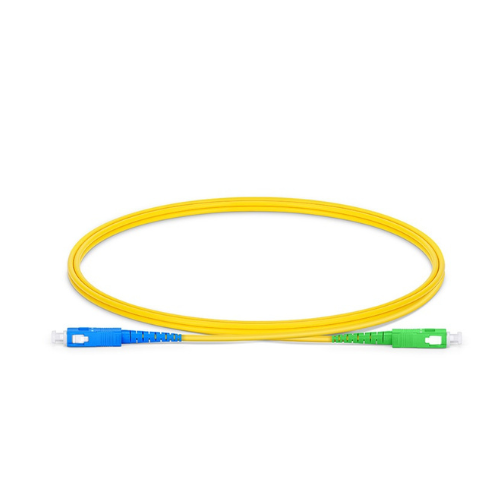
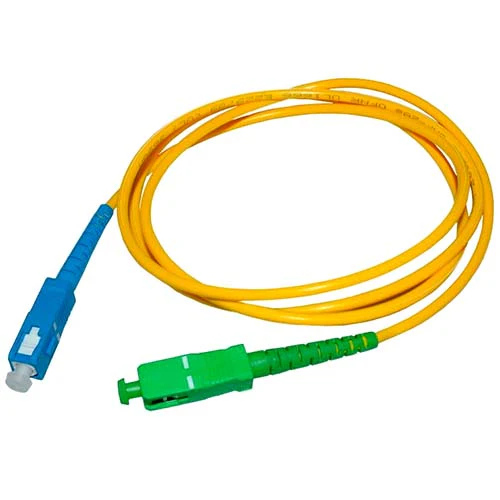
2M SC-UPC-SC-APC Fiber Optic Patch Cord
Original price was: KSh 180.00.KSh 150.00Current price is: KSh 150.00.
-
2M SC-UPC to SC-APC singlemode patch cord for high-speed fiber links
-
Low insertion loss and high return loss ensure reliable data transmission
-
LSZH jacket offers flame resistance and safety in indoor environments
-
Factory-tested and polished connectors ensure minimal signal loss
-
Ideal for FTTH, ODFs, CATV, and mixed-connector fiber networks
2M SC-UPC to SC-APC Singlemode Fiber Optic Patch Cord – High Precision for Reliable Optical Links
Upgrade your fiber optic network with the 2M SC-UPC to SC-APC Singlemode Patch Cord, a premium-quality cable designed for precision, performance, and long-lasting reliability. This singlemode patch cord connects devices with SC/UPC and SC/APC interfaces, offering low insertion loss, excellent return loss, and stable signal transmission across critical network applications.
Whether you’re building or expanding your FTTH, FTTB, telecom, or data center infrastructure, this patch cord ensures optimal connectivity between your devices and fiber optic components. With SC-UPC on one end and SC-APC on the other, it is ideal for connecting equipment or patch panels that require mixed connector types—without compromising performance.
Optimized for High-Performance Singlemode Networks
This 2-meter SC-UPC to SC-APC patch cord is built using high-grade 9/125μm singlemode G.657A1 or G.652D fiber, which supports long-distance and high-bandwidth transmission with minimal attenuation.
Each connector serves a specific purpose:
-
SC-UPC (Ultra Physical Contact) offers low insertion loss and is widely used in transceivers and test equipment.
-
SC-APC (Angled Physical Contact) provides better return loss by reducing back reflection, ideal for video, CATV, and RF applications.
By combining the two connector types in a single patch cord, this cable allows flexible integration of devices across diverse fiber optic systems.
Performance Specifications:
-
Insertion Loss: ≤ 0.3 dB (typical)
-
Return Loss: ≥ 50 dB (UPC) / ≥ 60 dB (APC)
-
Connector Type: SC-UPC to SC-APC
-
Fiber Type: OS2 Singlemode (9/125μm)
-
Length: 2 meters
Durable Construction with LSZH Jacket for Safety
The cable features a Low Smoke Zero Halogen (LSZH) outer jacket, ensuring safe use in enclosed or public spaces. In case of fire, LSZH materials emit minimal smoke and no halogen gases, making it ideal for:
-
Offices
-
Data centers
-
Server rooms
-
Residential and commercial buildings
The 2.0mm tight-buffered jacket offers flexibility without sacrificing strength, allowing easy routing and cable management even in high-density environments. This jacket type is also resistant to bending, crushing, and environmental exposure, making the patch cord suitable for indoor use under various conditions.
Wide Compatibility and Easy Installation
Designed with standard SC connectors, this patch cord is fully compatible with a wide range of fiber optic equipment. The SC-UPC end connects perfectly to optical transceivers, switches, media converters, and test equipment, while the SC-APC end is commonly used in FTTH applications and passive optical network (PON) systems.
Common use cases:
-
FTTH (Fiber to the Home)
-
FTTB (Fiber to the Building)
-
CATV and video signal transmission
-
Optical Distribution Frames (ODFs)
-
Network equipment with mixed connector types
-
Fiber optic splitters and ONT/OLT devices
Installation is as simple as plug-and-play—no polishing, splicing, or assembly required.
Precision Polishing for Minimal Signal Loss
The UPC and APC connectors are factory-polished and tested to strict industry standards, ensuring low-loss connections and high return loss values. The angled end-face of the APC connector minimizes back reflection, which is critical in systems where optical signal interference can degrade performance—especially in RF and high-frequency data transmission.
Each patch cord undergoes:
-
100% insertion and return loss testing
-
End-face inspection under magnification
-
Optical interferometry for geometry accuracy
-
Dust-free packaging and protective caps
This attention to detail guarantees reliable, high-performance connections across a wide range of optical network environments.
Ideal for Mixed Connector Applications
One of the biggest advantages of a SC-UPC to SC-APC patch cord is its ability to bridge different types of connectors. This makes it ideal for:
-
Connecting equipment with UPC connectors to APC-based distribution systems
-
Converting or testing signals between mixed systems
-
Avoiding the need for adapters in tight spaces
-
Custom network configurations requiring precision cabling
By reducing the number of components between links, the cable minimizes insertion points and improves overall network efficiency and reliability.
| Weight | 20 kg |
|---|
Be the first to review “2M SC-UPC-SC-APC Fiber Optic Patch Cord”
Related products
Networking
Networking
Networking
Networking
access point
Networking
Networking
Networking
Reviews
There are no reviews yet.